At first, in a long hospital residency, and finally, a lengthy and enjoyable career as an on-call obstetrician/gynaecologist in a busy hospital practice, I found it difficult to fall asleep for those seemingly brief periods between gynaecological emergencies requiring surgery, and managing an often busy obstetrical ward. Somewhere along that continuum, I learned self-hypnosis and meditation and, although there was often not enough time to practice it fully, over the years, I must have learned a few tricks.
When I even think of sleep, my mind often wanders, and things similar to what happens in that borderline state before I actually accept the gift of somnolence seem to assume undue importance. Just before falling asleep last night for example, I remembered the poem Journey of the Magi, by T. S. Eliot. Despite reading it many years ago in university, small parts of it have stuck with me all this time. It deals with the Wise Men journeying to the birth of Jesus and the fact that those Magi could not possibly have understood the profundities of the unfolding mystery that they were to witness; the fact that they continued to pursue the long journey despite its difficulties and without knowing what they were supposed to find was all the more mysterious and wonderful to me as I dozed off. Parts of the poem with partially remembered words slowly swirled in my head, and I was surprised that any of the Magi were ever able to find sleep:
‘A cold coming we had of it, just the worst time of the year for a journey, and such a long journey… There were times we regretted the summer palaces on slopes, the terraces, and the silken girls bringing sherbet… the night-fires going out, and the lack of shelters, and the cities hostile and the towns unfriendly and the villages dirty and charging high prices: a hard time we had of it. At the end we preferred to travel all night, sleeping in snatches, with the voices singing in our ears, saying that this was all folly…’ And so on… I think it’s the last few lines that I remember best, however:
‘We returned to our places, these Kingdoms, but no longer at ease here, in the old dispensation, with an alien people clutching their gods. I should be glad of another death.’
I suppose what I’m getting at are the busy day’s problems, the worries, and questions that still plague us even after we go to bed; with all of these stamping around in our heads, why do we wonder why we simply can’t drift off to sleep?
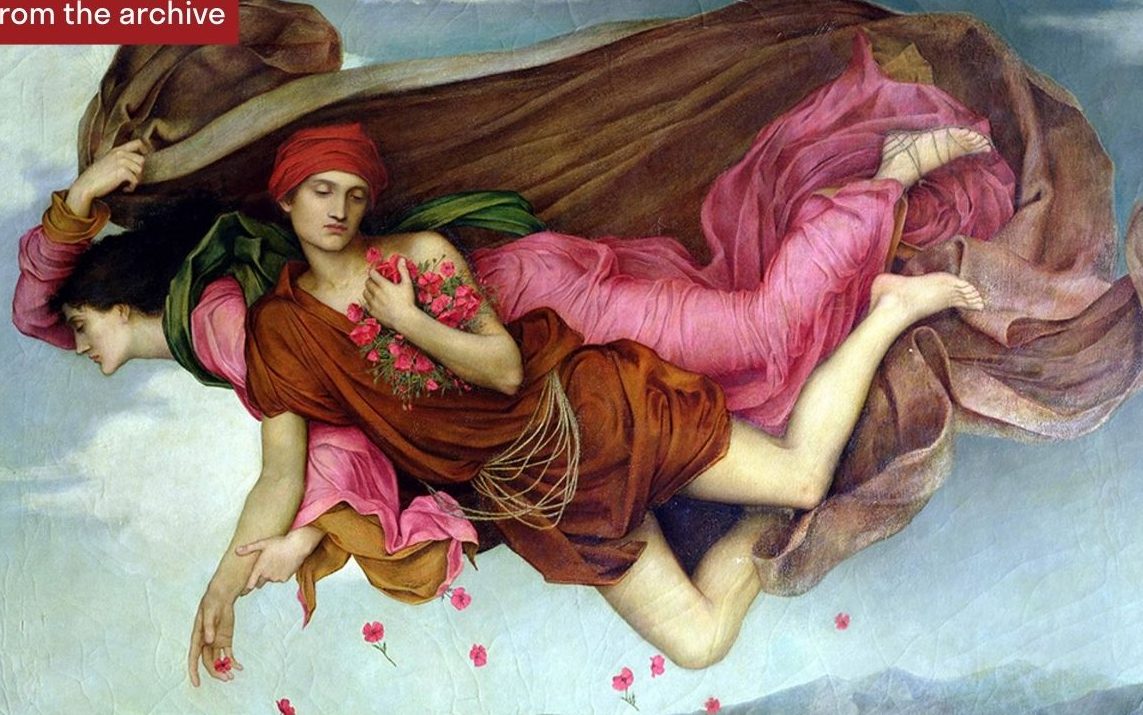
The picture I chose for the frontispiece of this essay is the painting Night and Sleep by Evelyn Morgan (1878) which depicts Nyx, the Greek goddess of night, flying over a darkening sky with her son Hypnos, the good-natured god of sleep who occupied a liminal area between sleeping and waking.
The important thing to realize about sleep when we so value alertness is that ‘The brain doesn’t sleep. Neither does the body. We do.[i]… We presume waking to be the centre of the universe of consciousness, and we relegate sleeping and dreaming to secondary, subservient positions… As wakists, we presume that who we are is limited to our waking-world identity. Essential parts of who we are, however, are obscured by the glare of waking life. And these become more visible at night – in the deep waters of sleep and dreams… We presume awareness of deep sleep is impossible because we have no waking reference points to conceptualise, name or recall it.’
It’s no wonder we sometimes have difficulty falling asleep: ‘The Dalai Lama teaches that the psychospiritual experience of falling asleep is identical to that of dying. Our familiar, waking self dies in sleep.’ We, who are often content with our usually hyper-aroused lives, do not easily relinquish consciousness and drift into sleep -especially if we think of his words (unaided by medications, alcohol, or drugs). Sleep is not a will-power thing; it requires a certain amount of humility and acquiescence. ‘Like an airplane in gradual descent from flight above the weather, coming down from hyperarousal involves negotiating a layer of turbulence… Our challenge is to avoid reflexively re-ascending to escape this experience. Humility is about trusting that the safety of sleep resides just beyond the turbulence.’ Interestingly ‘The word bed is, in fact, derived from garden bed. We replant the body in bed, temporarily returning it to its origins for nourishment.
‘As the body settles into bed, our challenge is to let go of our ordinary mind, our waking sense of self. This part of us, the part of us we usually call I, is simply incapable of sleeping. It can walk us to the shoreline of the sea of sleep, but it can’t swim… the part of us we call I can do only waking. Because wakism holds that this I is all that there is to us, it reinforces our addiction to waking and our reluctance to fall asleep.’ From the perspective of our waking self, ‘falling asleep is an accident. We can only slip, slide or trip into it.’ Letting go of the waking self is an act of humility.
When I was very young, I remember my mother standing at the door to my bedroom while a party of adults was going on outside on the midsummer lawn; she’d obviously seen me staring at it from the window: “Go to sleep,” she’d say with an exasperated smile. Thinking of that now, I realize how a command like that was doomed to fail: invoking sleep is about a gentler, more compassionate conversation. It’s an invitation, as if from Hypnos himself, to ‘Come to sleep’. In a way, invoking, not commanding sleep helps us fall in love with the act; it is a gift and not something we have to ask for, but something we have to be willing to stop working for and accept with thanks…
I‘m not sure how I discovered this so many years ago on those rare occasions on call when there was a lull in the night’s demands for me. And then, when in the middle of the night, I had to be available on a moment’s notice to exit the darkness of the ‘call room’ at a run and plunge into a room full of activity and occasional dire emergency and be my usual waking self.
Perhaps I felt the presence of Hypnos in the once dark corner of the call room, and he was smiling as he readied his next gift for when I returned: a gift of Love -or at least one of Hope…
[i] https://aeon.co/essays/the-cure-for-insomnia-is-to-fall-in-love-with-sleep-again
- April 2026
- March 2026
- February 2026
- January 2026
- December 2025
- November 2025
- October 2025
- September 2025
- August 2025
- July 2025
- June 2025
- May 2025
- April 2025
- March 2025
- February 2025
- January 2025
- December 2024
- November 2024
- October 2024
- September 2024
- August 2024
- July 2024
- June 2024
- May 2024
- April 2024
- March 2024
- February 2024
- January 2024
- December 2023
- November 2023
- October 2023
- September 2023
- August 2023
- July 2023
- June 2023
- May 2023
- April 2023
- March 2023
- February 2023
- January 2023
- December 2022
- November 2022
- October 2022
- September 2022
- August 2022
- July 2022
- June 2022
- May 2022
- April 2022
- March 2022
- February 2022
- January 2022
- December 2021
- November 2021
- October 2021
- September 2021
- August 2021
- July 2021
- June 2021
- May 2021
- April 2021
- March 2021
- February 2021
- January 2021
- December 2020
- November 2020
- October 2020
- September 2020
- August 2020
- July 2020
- June 2020
- May 2020
- April 2020
- March 2020
- February 2020
- January 2020
- December 2019
- November 2019
- October 2019
- September 2019
- August 2019
- July 2019
- June 2019
- May 2019
- April 2019
- March 2019
- February 2019
- January 2019
- December 2018
- November 2018
- October 2018
- September 2018
- August 2018
- July 2018
- June 2018
- May 2018
- April 2018
- March 2018
- February 2018
- January 2018
- December 2017
- November 2017
- October 2017
- September 2017
- August 2017
- July 2017
- June 2017
- May 2017
- April 2017
- March 2017
- February 2017
- January 2017
- December 2016
- November 2016
- October 2016
- September 2016
- August 2016
- July 2016
- June 2016
- April 2016
- January 2016
- December 2015
- November 2015
- October 2015
- September 2015
- August 2015
- July 2015
- June 2015
- May 2015
- April 2015
- March 2015
- February 2015
- January 2015
- December 2014
- November 2014
- October 2014
- September 2014
- August 2014
- July 2014
- June 2014
- May 2014
- April 2014
- March 2014
- February 2014
- January 2014
- December 2013
- November 2013
- October 2013
- September 2013
- August 2013
- July 2013
- June 2013
- May 2013
- April 2013
- March 2013
- February 2013
- January 2013
- December 2012
- November 2012
- October 2012
- September 2012
- August 2012
- July 2012
- June 2012
 musingsonwomenshealth.com
Leave a comment