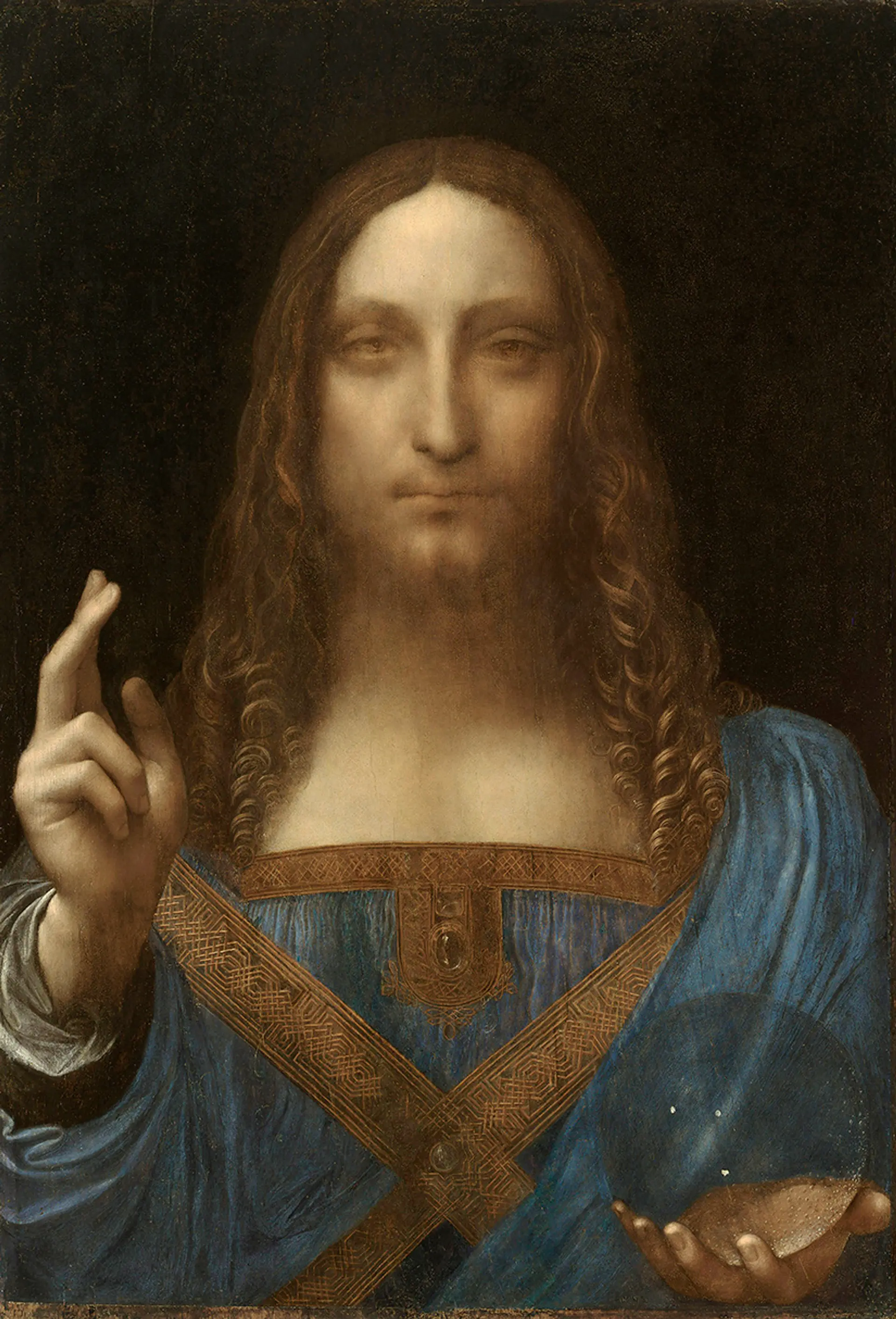
I have to admit that I often approach Art much like I approach a forest: full of beauty as a whole, and yet less impressive if I am asked to dissect it too closely. But I have to admit that some paintings attract me: they are more than just token forests; some contain whole neighbourhoods of rustling trees and chittering birds with little gurgling creeks, and wind ruffling the branches making them seem more real. I can feel and hear these as I lose myself in memories.
The art matters of course, but much like colours and composition I usually prefer not to bury myself in details: like a forest, a painting is what it is; I admire it, or I don’t. Either it captures my imagination, or I walk away unquenched.
Or at least I did until I began to watch the BBC television series Fake or Fortune in which the historian and British Art dealer, Phillip Mould, and journalist Fiona Bruce examine various, usually contested, paintings or other works of art. And, detectives both, they search for provenance (origin), and attribution (who the artist was), involving other experts in Forensic analysis. Indeed, specialist research for the program was also carried out Bendor Grosvenor, also a well-known art historian, during the first five series or so, and professor Aviva Burnstock thereafter.
Watching the TV episodes drew me into a world I had not expected to be so exciting. But mysteries are supposed to be like that I suppose: knowledge is sometimes less intriguing than the search for it, don’t you think? ‘The art market is an overheated system built on partial information, asymmetries of knowledge, and incentives that quietly encourage optimism.’[i] Indeed, ‘Risk is not an unfortunate side-effect, it may rather be a subconscious part of the appeal. Like the stock market, the art market is fuelled by volatility, speculation and the tantalising possibility of being right when others are wrong.’
What I think I have learned (from the program, and not my own incredibly limited knowledge of Art) is the importance, of the difference between a definite ‘by’ and the shakier ‘attributed to’. There seems to be a ‘cultural fixation on authorship that has shaped Western art history since the Renaissance. We are not content to admire a painting; we want to know who made it. We want to embed creativity inside a name, a biography, a singular genius.’ And yet, ‘in the early modern period, artists rarely worked alone. Large workshops produced paintings collaboratively, with masters overseeing teams of assistants who executed backgrounds, drapery, architecture or secondary figures… Attribution has become a fetish, invested with meanings that extend far beyond historical accuracy. It is bound up with authenticity, originality and value, even when those concepts are only loosely connected.’
Wading through the morass that often surrounds the evaluation of Art, there would seem to be a four-pronged model of assessment that constitutes best practice: connoisseurship, forensic science, provenance research and AI analysis, operating in concert.
And no, AI (the variety used in Art assessment at any rate) is not human; it doesn’t offer value judgments like we do: ‘AI is not drawing information from everywhere on the internet. It is carefully curated by a team of thoughtful humans, and the basis of the data set is the catalogue raisonné of the artist against whom the work in question is being tested. The catalogue raisonné is the definitive catalogue of all known works by an artist, assembled by a team of leading human art historians specializing in the artist in question, and including, whenever available, information from forensic tests, as well as listed provenance. It should contain the best information gathered by humans in terms of connoisseurship, provenance and forensics. That’s how the AI learns how to recognise an artist’s hand – but it looks with a level of microscopic detail and cool objectivity that human experts cannot attain. It then offers up a probability, not a yes or a no, that is interpreted by humans.’
I think that’s about as much as a forest-watcher like me can say about the appraisal of Art. But it did get me thinking about Art of a different kind -a kind that wasn’t vetted by AI because the attribution seemed unnecessary to a connoisseur like me: I mean I know my daughter’s Kindergarten and primary school art works, eh? I can even remember the chip on the fridge door which I used the art work to cover if the size or the crumpling in a school bag rendered it possible.
Still, I suppose unless the memory is fresh and unimpeded by the neuronal ravages of half a century’s detritus, much could have been lost, or at least modified by the intervening time. We remember what we want to, and although often challenged by others who have witnessed similar primary school Art workshops, disagreement lingers. Even the artists-in-training who have spent class after class working on fridge-worthy creations under the tutelage of caring, but too-forgiving masters, may have been influenced by the drawings of the child on the table beside them. To a proud and also too-forgiving Dad, the fridge door always awaits; it’s the giver, not the given that is cherished.
Maybe mothers and fathers look at things differently, though. A few years back, my ex texted me with a photo she’d taken of a drawing that our daughter had submitted to us for fridgeware when she was in grade 1 (although the provenance was unverifiable at a distance of 20 or 30 years). My ex thought phoning me about it was a little too personal after all those years apart.
“Thought you’d enjoy this one she drew of a foot. I found it in folded into an old envelope in a suitcase I was about to recycle,” she texted. “She always had trouble drawing feet, remember?”
Actually I didn’t, but I let it pass. To me, anything she drew was precious. Still, I think my ex would not qualify as the sole connoisseur of our child’s art, and if I were to attempt an identification of the subject matter, ‘foot’ would not have been in the running. To me, it was a ‘hand’ albeit drawn from an angle where the heel would have qualified as the wrist; and because the thumb had not been afforded the expected size or location, I would have put that down to artistic licence -a kind of Daliesque surreal crayon rendering of an otherwise familiar object.
I mean it was nice of my ex to remind me of a piece of art that I obviously hadn’t apportioned to my belongings when I moved out so many years ago, but still, I felt it was important that she recognize the equal roles we’d played as co-curators of our daughter’s early fridge portfolio.
“Thank you for the drawing. I’d forgotten that one… But I think it’s a hand; not a foot” I texted back after spending some time re-evaluating the drawing.
I didn’t get a reply for day or so. Then in the middle of the night: “I still think it’s a drawing of the foot you kept in your mouth at those parties we used to go to…”
Exes shouldn’t still be sarcastic -especially at the distance of years. And anyway, my daughter always knew I understood her drawings…
[i] https://aeon.co/essays/could-ai-replace-human-art-experts-in-attributing-paintings
- October 2026
- September 2026
- August 2026
- July 2026
- June 2026
- May 2026
- April 2026
- March 2026
- February 2026
- January 2026
- December 2025
- November 2025
- October 2025
- September 2025
- August 2025
- July 2025
- June 2025
- May 2025
- April 2025
- March 2025
- February 2025
- January 2025
- December 2024
- November 2024
- October 2024
- September 2024
- August 2024
- July 2024
- June 2024
- May 2024
- April 2024
- March 2024
- February 2024
- January 2024
- December 2023
- November 2023
- October 2023
- September 2023
- August 2023
- July 2023
- June 2023
- May 2023
- April 2023
- March 2023
- February 2023
- January 2023
- December 2022
- November 2022
- October 2022
- September 2022
- August 2022
- July 2022
- June 2022
- May 2022
- April 2022
- March 2022
- February 2022
- January 2022
- December 2021
- November 2021
- October 2021
- September 2021
- August 2021
- July 2021
- June 2021
- May 2021
- April 2021
- March 2021
- February 2021
- January 2021
- December 2020
- November 2020
- October 2020
- September 2020
- August 2020
- July 2020
- June 2020
- May 2020
- April 2020
- March 2020
- February 2020
- January 2020
- December 2019
- November 2019
- October 2019
- September 2019
- August 2019
- July 2019
- June 2019
- May 2019
- April 2019
- March 2019
- February 2019
- January 2019
- December 2018
- November 2018
- October 2018
- September 2018
- August 2018
- July 2018
- June 2018
- May 2018
- April 2018
- March 2018
- February 2018
- January 2018
- December 2017
- November 2017
- October 2017
- September 2017
- August 2017
- July 2017
- June 2017
- May 2017
- April 2017
- March 2017
- February 2017
- January 2017
- December 2016
- November 2016
- October 2016
- September 2016
- August 2016
- July 2016
- June 2016
- April 2016
- January 2016
- December 2015
- November 2015
- October 2015
- September 2015
- August 2015
- July 2015
- June 2015
- May 2015
- April 2015
- March 2015
- February 2015
- January 2015
- December 2014
- November 2014
- October 2014
- September 2014
- August 2014
- July 2014
- June 2014
- May 2014
- April 2014
- March 2014
- February 2014
- January 2014
- December 2013
- November 2013
- October 2013
- September 2013
- August 2013
- July 2013
- June 2013
- May 2013
- April 2013
- March 2013
- February 2013
- January 2013
- December 2012
- November 2012
- October 2012
- September 2012
- August 2012
- July 2012
- June 2012


Leave a Reply