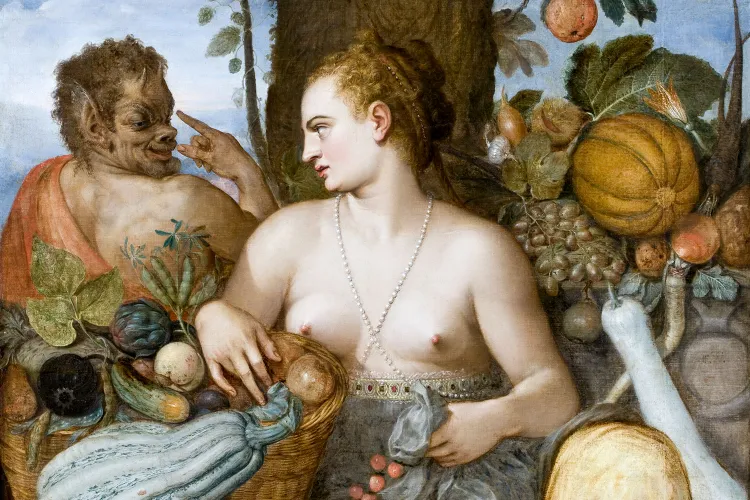
I suppose it shouldn’t be a complete surprise that ugliness came to symbolize vice -at least in Renaissance Art. And for some people, perhaps there’s something a bit Schadenfreudish in it: that those people whose very appearance revolts them are receiving their imagined just rewards, and that, on the other hand, beauty should not be maligned; it should not require someone -an Auriga– to whisper in the ear of an attractive woman (let’s say) that she, too, is mortal like the rest of us. I don’t really understand, what constitutes ugliness though… is it something that a reflection in a mirror can capture when I first get up in the morning? Or is it more of a feeling, a mood which comes over me if I am depressed…?
I wonder if there is an analogy in literature: how we imagine a character we have first met through a story we have read for example. I’m sure we all have a mental picture of Quasimodo, the hunchbacked hero of Victor Hugo’s 19th century novel ‘The Hunchback of Notre Dame’. He is the deaf and almost blind bell-ringer of the famous Cathedral in Paris. Quasimodo had several physical deformities rendering him ‘ugly’ and therefore to be villified. Although I haven’t delved into its academic literary appraisal, I think Hugo’s intent was to describe Quasimodo as someone difficult to fear though, and indeed to imagine as someone who was as lovable as a homely family pet.
There have been many film and TV adaptations of the story, but none of the ones I have seen came anywhere close to how I imagined Quasimodo would look. His ugliness and deformities that I read about simply failed to convey evil either in my mind or on the screen, no matter the makeup, no matter the music, no matter the acting… So is ugliness, a construct? An eye-of-the-beholder thing? As Shakespeare wrote in A Midsummer Night’s Dream, ‘The lunatic, the lover, and the poet, are of imagination all compact’.
For most of us in the real world who just exist on the sidelines, the rules seem less strenuously applied -if applied at all. We are the unexamined crowd whose members are unnamed, and seen only as a backdrop unless someone breaks ranks and throws down a gauntlet far enough from the throng to be noticed.
During the Renaissance a person’s appearance was often felt to reveal their inner character, their value to a vain society. It is less so now, but the impression has not completely disappeared I fear. We’re not sure what to consider ugly, anymore: even the language we now use to describe the wide variety of human bodies and faces, as well as emotional and mental states, is often positive rather than negative, accepting rather than rejecting, pitying not condemning -carefully neutral…
Even so, if I concentrate on symmetry, for example, I see little variations in others which, after noticing them, sometimes become bothersome; it is the contrast which jars; the contrast which creates the dynamic tension. Once in my long ago youth, when we were riding our bikes together, I noticed that my best friend Teddy had big ears -bigger than mine at any rate. But I liked Teddy and he wasn’t at all ugly. I mentioned my thoughts about his ears one day and rather than getting angry, he smiled and told me he had the same thoughts about my nose: it was bigger than my face needed. We looked at each other and began to laugh; it was what we were inside that mattered to each of us. So, I suppose I don’t really understand what ugliness means – or what ugliness is, for that matter…
But maybe it doesn’t always work like that; when Renaissance artists like Leonardo da Vinci gained a richer understanding of human anatomy, an idealized conception of beauty took shape in European culture, with specific proportions and physical features prized above all others.[i] Depending upon the context of the portrayal, any variations were suspect; ugliness became a foil to beauty. But even da Vinci once suggested that the two aesthetics appeared more powerful when seen in contrast. Without one, viewers can’t fully appreciate the other: they are two sides of the same coin.
In Renaissance depictions, artists were often dismayed by disproportionate bodies, dislocations, malformations and hybridizations, using such features to depict ‘the villainous, the wicked and the mad … with strong social and moral connotations.’ Anyone who was considered marginalized or socially inferior—including individuals with dwarfism or court jesters (who were often chosen for their deformities)—could be labeled ugly simply for being different.
So too, ‘people perceived as sinners came under scrutiny in Renaissance art, with their outward appearances mirroring their vices. An envious woman might be shown as a wizened witch, for example, while a tax collector deemed guilty of greed might present a face twisted with avarice.’
I don’t know very much about Art history and what little I do understand is mainly what I’ve learned from the television series Fake or Fortune, I’m afraid. Otherwise, apart from my daughter’s drawings from her very earliest school years and their easily discoverable Provenance, I feel largely adrift. In those days it was all too easy to praise the unchanging genre (daddy pictures were what she usually showed me): all crafted with love, but too much of a kind to remember the details.
One picture still stands out in my memory, however: a drawing of a terribly misshapen head that was scowling at something undisclosed. I asked her about the head and why it was so distorted (I’d hesitated to call it ugly in case she took my evaluation as a criticism).
“It’s my Art teacher,” she replied with a big smile. “She was being bad to Janice because she caught her eating crayons.”
I just had to ask. “So why was Janice eating her crayons?”
I remember my daughter shrugging as if there were so many things adults didn’t know. “She was hungry, Daddy. It was almost snack time, and Miss Wren should have known.”
I suppose I should have thought of that. Maybe Renaissance people should have asked more questions as well, eh?
[i] https://www.smithsonianmag.com/smart-news/renaissance-art-linked-beauty-with-virtue-and-ugliness-with-vice-see-how-painters-from-leonardo-da-vinci-to-botticelli-viewed-physical-attractiveness-180988584
- October 2026
- September 2026
- August 2026
- July 2026
- June 2026
- May 2026
- April 2026
- March 2026
- February 2026
- January 2026
- December 2025
- November 2025
- October 2025
- September 2025
- August 2025
- July 2025
- June 2025
- May 2025
- April 2025
- March 2025
- February 2025
- January 2025
- December 2024
- November 2024
- October 2024
- September 2024
- August 2024
- July 2024
- June 2024
- May 2024
- April 2024
- March 2024
- February 2024
- January 2024
- December 2023
- November 2023
- October 2023
- September 2023
- August 2023
- July 2023
- June 2023
- May 2023
- April 2023
- March 2023
- February 2023
- January 2023
- December 2022
- November 2022
- October 2022
- September 2022
- August 2022
- July 2022
- June 2022
- May 2022
- April 2022
- March 2022
- February 2022
- January 2022
- December 2021
- November 2021
- October 2021
- September 2021
- August 2021
- July 2021
- June 2021
- May 2021
- April 2021
- March 2021
- February 2021
- January 2021
- December 2020
- November 2020
- October 2020
- September 2020
- August 2020
- July 2020
- June 2020
- May 2020
- April 2020
- March 2020
- February 2020
- January 2020
- December 2019
- November 2019
- October 2019
- September 2019
- August 2019
- July 2019
- June 2019
- May 2019
- April 2019
- March 2019
- February 2019
- January 2019
- December 2018
- November 2018
- October 2018
- September 2018
- August 2018
- July 2018
- June 2018
- May 2018
- April 2018
- March 2018
- February 2018
- January 2018
- December 2017
- November 2017
- October 2017
- September 2017
- August 2017
- July 2017
- June 2017
- May 2017
- April 2017
- March 2017
- February 2017
- January 2017
- December 2016
- November 2016
- October 2016
- September 2016
- August 2016
- July 2016
- June 2016
- April 2016
- January 2016
- December 2015
- November 2015
- October 2015
- September 2015
- August 2015
- July 2015
- June 2015
- May 2015
- April 2015
- March 2015
- February 2015
- January 2015
- December 2014
- November 2014
- October 2014
- September 2014
- August 2014
- July 2014
- June 2014
- May 2014
- April 2014
- March 2014
- February 2014
- January 2014
- December 2013
- November 2013
- October 2013
- September 2013
- August 2013
- July 2013
- June 2013
- May 2013
- April 2013
- March 2013
- February 2013
- January 2013
- December 2012
- November 2012
- October 2012
- September 2012
- August 2012
- July 2012
- June 2012


Leave a Reply